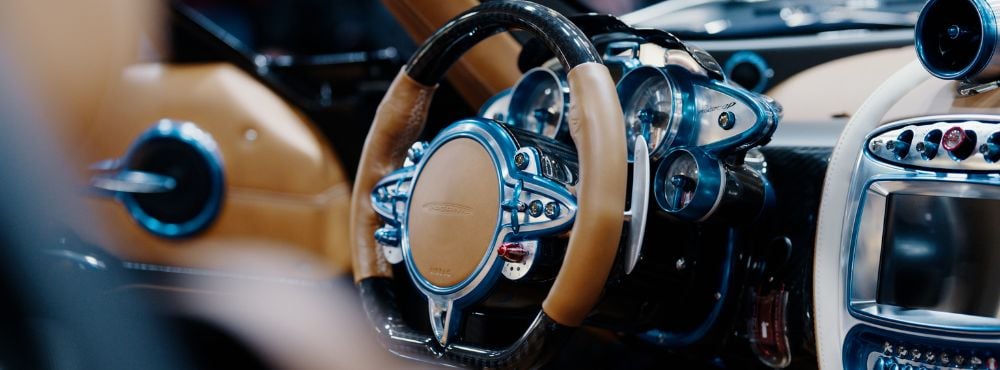
Design Story: Pagani Huayra Roadster — When Engineering Becomes Art
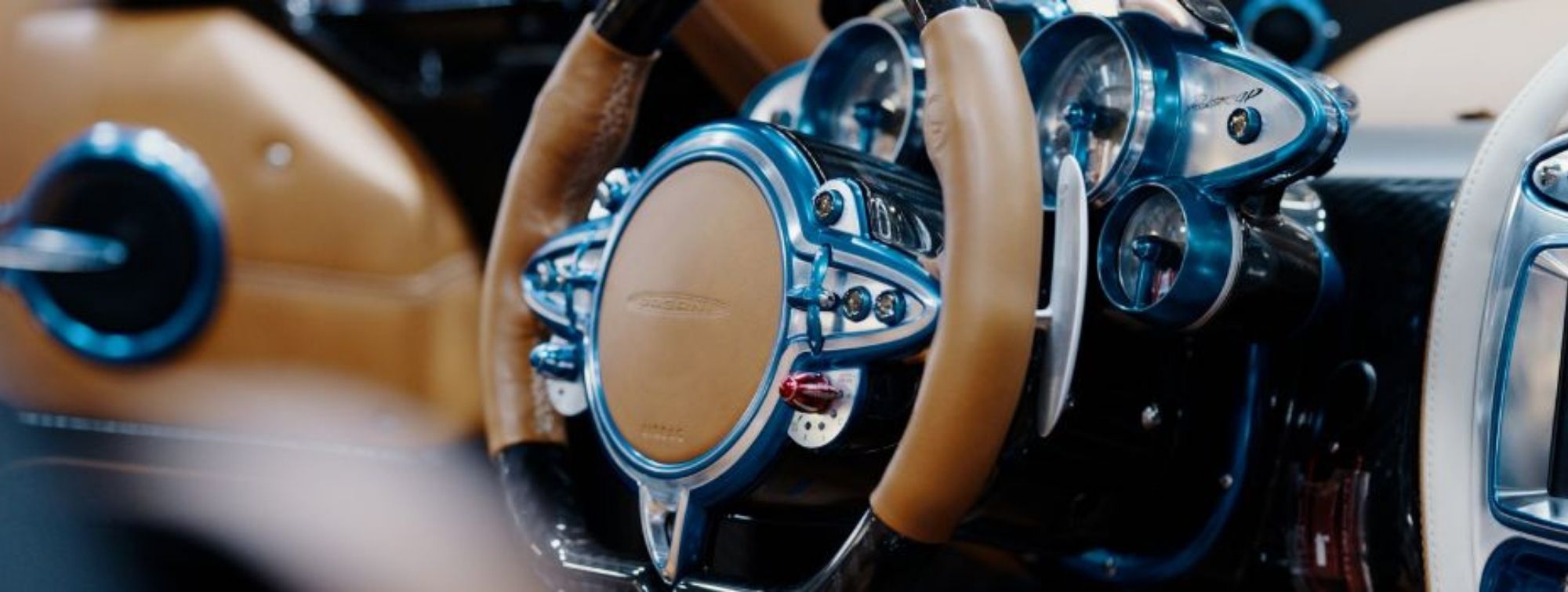
Pagani Huayra Roadster: The Perfect Balance of Art, Design and Engineering
Pagani Huayra Roadster: The Evolution of an Icon
When it succeeded the legendary Zonda in 2011, the Pagani Huayra had the challenge of following one of the most iconic supercars of its generation. The Zonda had become an icon of automotive excellence, defining a generation with its radical character and timeless design. Yet for Horacio Pagani, simply evolving the Zonda was never an option. The Huayra had to open a new chapter for the brand, with its own identity while preserving the principles that had made Pagani so distinctive.
This new design language quickly made its mark. More fluid and organic, the Huayra moved away from the almost architectural volumes of the Zonda, replacing them with surfaces shaped by the flow of air. The lines became softer without losing their character, creating a silhouette in which every curve appears to naturally lead into the next.
A few years later, Pagani took this approach even further with the Huayra BC. Lighter, more powerful and far more expressive from an aerodynamic perspective, the BC introduced a dramatic new aerodynamic package, including a large rear wing, a redesigned diffuser, new front blades and numerous additional aerodynamic elements.
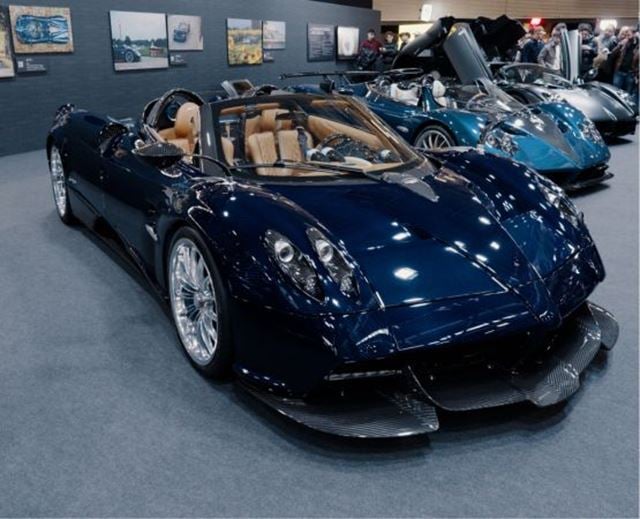
The philosophy ultimately reached its fullest expression with the Huayra Roadster. Presented as being lighter than the Coupé, the Roadster was described by Horacio Pagani himself as “the most difficult work” his team had ever undertaken. Far more than a convertible version of the Huayra, it was developed as a new model, incorporating many of the technical advances introduced with the BC while retaining the elegance and purity of the original design.
The Pagani Philosophy: When Design and Engineering Become One
At Pagani, one belief guides every project: design and engineering should never be treated as separate disciplines. Engineering does not simply serve the design, it helps create it. Every component is shaped to fulfil a precise mechanical function while contributing to the overall aesthetic of the car. Likewise, every design choice must have a technical purpose behind it.
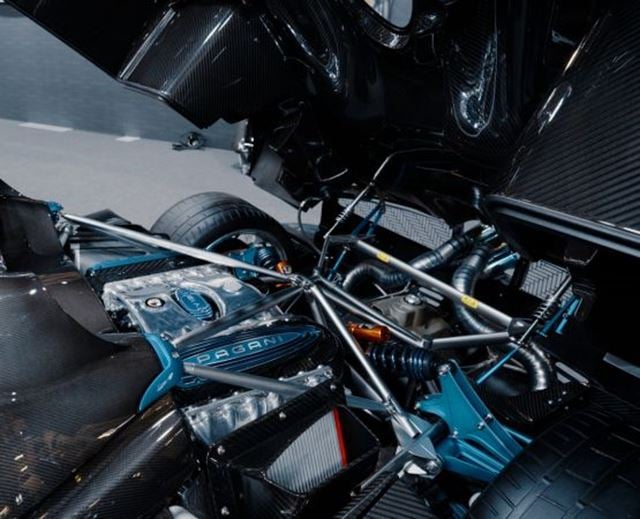
This philosophy was at the heart of our conversation with Alberto Piccolo, Head of Advanced Design at Pagani. Opening the Huayra Roadster’s engine bay, he revealed a mechanical architecture where nothing is hidden. Materials, fasteners, suspension components and carbon structures become visual elements as much as technical ones.
The roll bars are perhaps the clearest example. Far more than structural components, they have become a distinctive design signature. Made from carbon-titanium, a material developed by Pagani that combines the lightness of carbon fibre with the strength of titanium, they are deliberately left exposed. They help define the visual structure of the rear of the car while enhancing the beauty of the engine bay.
This constant pursuit of innovation extends throughout the chassis, which is built using Carbo-Titanium and Carbo-Triax HP52, two exclusive composite materials designed to significantly increase rigidity while keeping weight under control.
At the heart of this mechanical sculpture sits a 6.0-litre twin-turbo V12 developed by AMG, producing 764 hp and 1,000 Nm of torque. Once again, the engine is not simply hidden beneath the bodywork, it is an integral part of the design. Its dimensions, positioning and even its presentation all contribute directly to the visual identity of the Huayra Roadster.
The Huayra Roadster: The Automobile as a Work of Art
Looking at the Pagani Huayra Roadster is to understand that you are not simply standing in front of a hypercar, but admiring a work of art shaped with the same principles as a sculpture or a piece of fine jewellery.
Every air intake, every opening, every machined aluminium component and exposed carbon detail tells a story. The influence of Leonardo da Vinci, which Horacio Pagani has embraced since the very beginning of the brand, can be seen throughout the car: art and science are treated as one.
This pursuit of perfection is also rooted in European architecture and heritage. Horacio Pagani has long admired the work of Gustave Eiffel, whose structures demonstrate how engineering and aesthetics can come together to create something truly iconic.