
The Ultimate Review #6
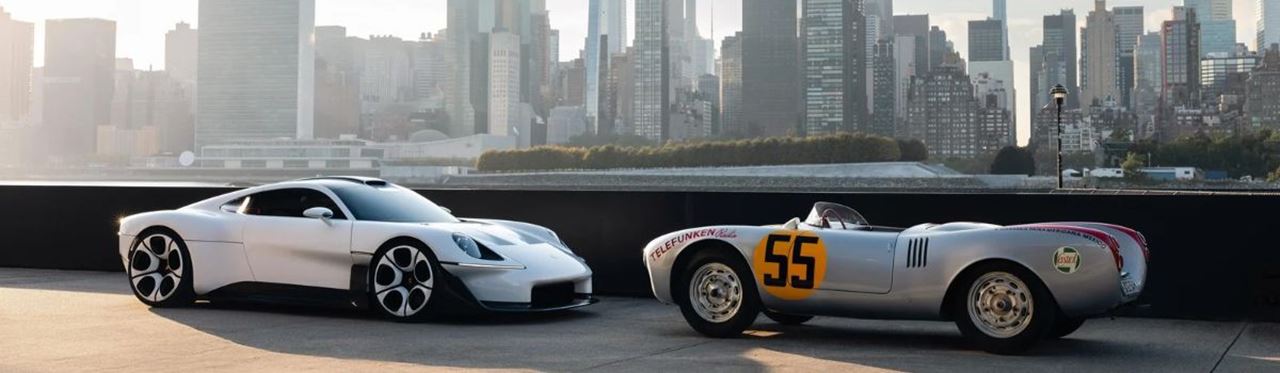
Porsche Mission S – A first glimpse of a mid-engined supercar

Faithful to this heritage, the Mission S reinterprets several of Porsche’s historic design signatures through a contemporary lens. Its torpedo-shaped front wings, distinctive roofline and dramatic proportions create a low-slung, sculptural silhouette. References to the 911, 959, GT1 and 917 blend seamlessly with modern technical features, including a fully integrated active rear wing.
Inside, a deliberate sense of minimalism takes centre stage. Drawing inspiration from the 550 Spyder and 356, the cabin is entirely focused on the driver. Five circular instruments sit behind the steering wheel, combining physical controls with digital displays in an ergonomic layout designed to put the driving experience first. Porsche has even opted to dispense with a permanent central screen, instead introducing a retractable, MagSafe-compatible smartphone holder.
Beyond this design statement, the Mission S primarily previews the development of a new mid-engined supercar platform, set to complement the 911 at the top of Porsche’s range. A strategic move that signals the brand’s ambition to explore new territory while reconnecting with the sporting heritage first established by the 550 Spyder.
Tesla Roadster – To infinity and beyond
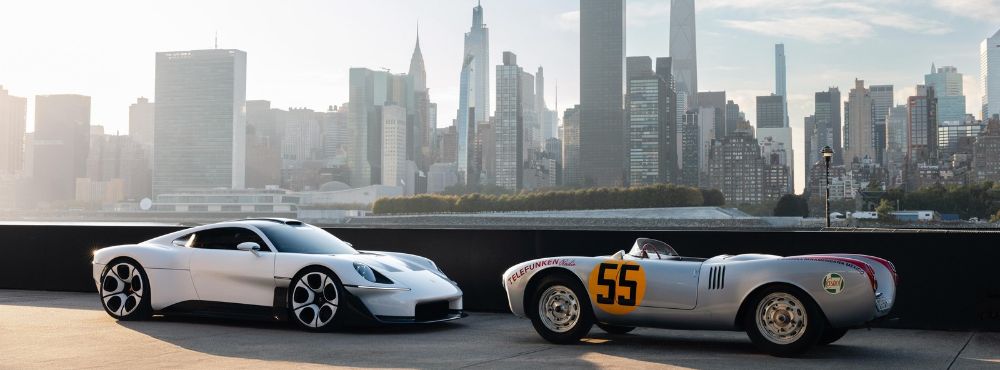
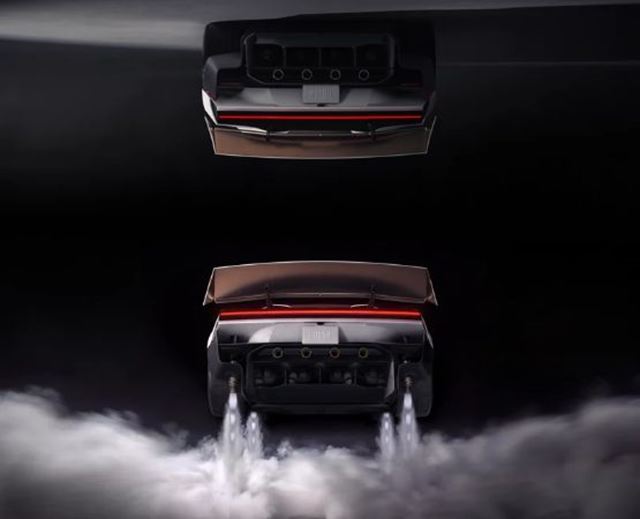
The Thrust version combines a multi-mode suction system with cold-gas thrusters integrated into the rear of the car, enabling a claimed 0–60 mph (96 km/h) sprint in under one second. Even more radical, the Rocket variant features thrusters positioned around the perimeter of the vehicle, allowing forward and upward acceleration as well as lateral rotational movement. A configuration that, quite simply, enables the car to fly. Available by invitation only, this version is not approved for public road use.
By blurring the boundaries between automotive engineering and aerospace technology, Tesla ventures into largely uncharted territory, where the laws of physics become another challenge to overcome. Could the Roadster point towards an entirely new direction for the supercars of tomorrow?
Aston Martin Valhalla Spider – Hybrid Supercar, Open-Air Thrills

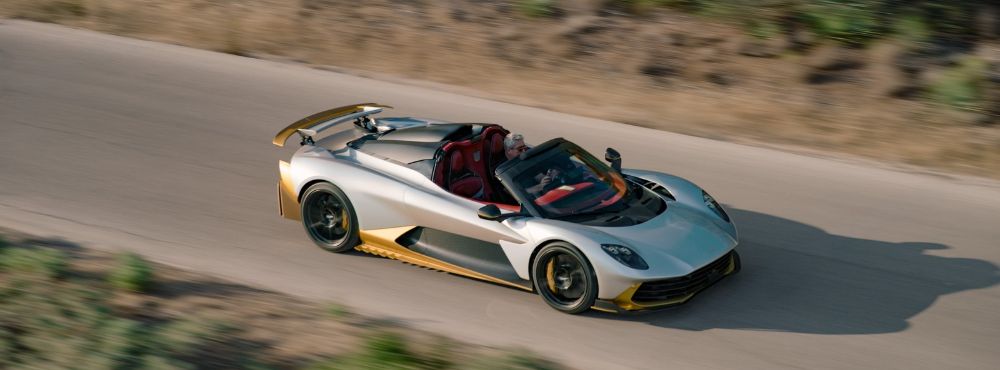
Beneath its sculpted bodywork, the Valhalla Spider retains the coupé’s 1,079 PS and 1,100 Nm plug-in hybrid powertrain. At its heart sits a bespoke 4.0-litre twin-turbo V8 with a flat-plane crankshaft, producing 828 PS, complemented by three electric motors delivering a further 251 PS. An eight-speed dual-clutch transmission and electric all-wheel drive complete the package, while revised active aerodynamics and ESP calibrations preserve the car’s balance and generate more than 600 kg of downforce, with the roof fitted.
Developed in close collaboration with Aston Martin Performance Technologies, the Valhalla Spider retains the dynamic character of its coupé sibling while opening up new possibilities behind the wheel. Combining supercar performance, hybrid technology and open-air thrills, it brings together track-focused engineering and the appeal of an exceptional roadster. First deliveries are scheduled for the third quarter of 2027.
CAVËN Atelier HOMMAGE 26 – Giugiaro Reimagines the Gallardo
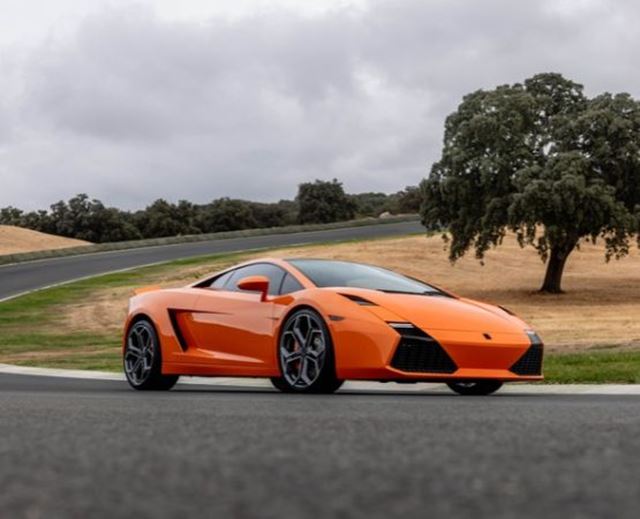
Far from a simple tribute, the HOMMAGE 26 gives the first-generation Gallardo a striking new identity. Almost entirely redesigned in carbon fibre, its bodywork introduces retractable headlights, active aerodynamic features and a sculpted rear section with an opening window above the engine bay. Only a handful of original components remain, including the roof, windscreen, side windows and mirrors. The result brings together familiar Gallardo proportions and a more radical interpretation of Giugiaro’s original design language.
The transformation extends beneath the bodywork. The Gallardo’s naturally aspirated 5.0-litre V10 has been extensively developed by Italian engineering specialist Italtecnica and is offered in two states of tune: 540 hp in GT specification and 560 hp in Performance form. Both versions retain a manual gearbox, while revised suspension settings, Comfort and Sport driving modes and upgraded brakes complete the mechanical package.
Limited to just 25 examples, each HOMMAGE 26 is built around an existing Lamborghini Gallardo, supplied by its owner or sourced by CAVËN Atelier. The project also marks the debut of the atelier’s Designer Series, an initiative that gives automotive designers the opportunity to revisit defining moments in their careers and reinterpret their own work. In doing so, the HOMMAGE 26 celebrates the enduring appeal of Italian coachbuilding, where individual vision and bespoke craftsmanship take precedence.
The experience begins now
From 3 to 7 February 2027 in Paris, Ultimate Supercar Garage will bring together an exclusive selection of leading international supercar manufacturers. This is a unique opportunity to see these exceptional cars up close, admire their design and discover the latest innovations shaping the world of supercars.